

1
Rulebook
Description and objective, team composition, format and progression, run structure and timings, permitted and prohibited actions, penalties, appeals, and definitions.
Events / Algorithm Challenge
The Doon School · 08–10 December 2026
Both questions are compulsory. The first 15 minutes are for flowcharts, rough sketches and planning only. Functional correctness carries 60 of the 100 marks, but optimisation counts too.
Competitive programming
Rules
Event details
Judging
Judging rubric
| Criterion | Weight | Marks |
|---|---|---|
| Functional correctness (30 per question) | 60 | |
| Algorithmic efficiency & complexity (10 per question) | 20 | |
| Code structure & documentation (10 per question) | 20 | |
| Total | 100 |
Weights are those in the event’s published documents. Scoring levels, tie-break order and who scores what are set out in full in the document pack below.
Documents
5 of 5 documents available
These are the documents your team will receive for Algorithm Challenge. Between them they set out everything a team needs in order to prepare.
1
Rulebook
Description and objective, team composition, format and progression, run structure and timings, permitted and prohibited actions, penalties, appeals, and definitions.
2
Platform & Environment Specification
Languages and libraries permitted, devices brought versus provided, internet access, policy on AI tools, provided datasets and platforms, submission format.
4
Judging Rubric
Criteria with point values summing to a stated total, scoring levels, tie-break order, who scores what, and when scores are published.
5
Inspection & Safety
Pre-competition inspection checklist and schedule, consequences of failed inspection, safety requirements during runs, spectator boundaries, and the emergency stop procedure.
6
Support Material
A worked example, a starter guide to core techniques, the concepts a team should learn, common mistakes, and an FAQ.
Flow
The event from start to finish, as the rules above set it out. The detailed documents for Algorithm Challenge will appear here once they are released to registered schools.
Setup: log in, test the IDE and run “Hello World”
Two compulsory questions released
Planning (15 minutes)
Flowcharts, rough sketches or planning out the code only.
Coding (1 hour 15 minutes)
Write, test and modify in one of Java, Python, C or C++.
Live run
Console input and output only; the code may not be changed while it executes.
Hidden test cases and judges’ review
Correctness and speed through the portal; structure and complexity by the judges.
Scored out of 100: 50 per question
Who runs it
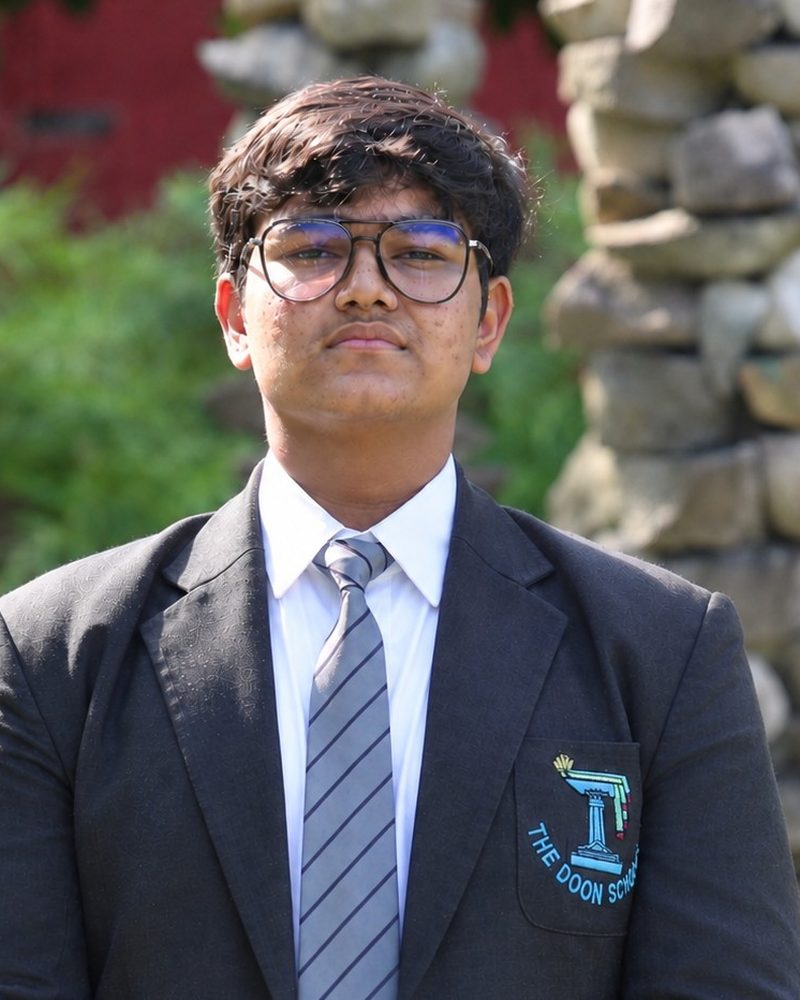
Udayan Narayan
Event Head
Udayan is a Class 11 student at The Doon School pursuing the IB Diploma Programme, with a keen interest in Engineering, Robotics and Technology. A former Anchor of the IPSC IT Fest, he serves this year as the Event Head of the Algorithm Challenge. He has represented the School in table tennis at the IPSC level, and brings the same composure and strategic instinct to everything he takes on. His interests also extend to psychology and human behaviour. He is honoured to serve as the Event Head of the Algorithm Challenge at the IPSC IT Fest 2026.
Next
Teams audit a deliberately flawed image dataset, train a baseline model, hunt its errors on 30 unseen images, fix the data with up to 10 photos, and present their findings.