

1
Rulebook
Description and objective, team composition, format and progression, run structure and timings, permitted and prohibited actions, penalties, appeals, and definitions.
Events / Half-Life
The Doon School · 08–10 December 2026
The arena, the line track and the bin positions never change. Only the colours of the 8 objects change, one layout per round drawn by lot, and a red object, once lifted, has 45 seconds to reach the red bin.
AGV: Autonomous Ground Vehicle Navigation
Rules
Object classes
Event details
Judging
Arena
Drawn to scale from the Arena Specification. Drag to rotate, switch to plan view, draw a new colour layout, or show a 250 mm robot to check clearances. Click into the model to zoom.
Judging rubric
| Criterion | Weight | Marks |
|---|---|---|
| Design and build quality | 15 | |
| Object sorting | 48 | |
| Completion time | 25 | |
| Parking accuracy | 6 | |
| Wall contacts | 6 | |
| Total | 100 |
Weights are those in the event’s published documents. Scoring levels, tie-break order and who scores what are set out in full in the document pack below.
Documents
5 of 6 documents available
These are the documents your team will receive for Half-Life. Between them they set out everything a team needs in order to prepare.
Version 2, 5 November 2026. Text highlighted in yellow is new or changed since the version of 9 October, and each document ends with a table listing every change. The Robot Specification is unchanged.
1
Rulebook
Description and objective, team composition, format and progression, run structure and timings, permitted and prohibited actions, penalties, appeals, and definitions.
2
Robot Specification
Dimensions at start and expanded, mass, power source and voltage limits, permitted actuators and sensors, control method, communication protocol, prohibited materials.
3
Arena Specification
A dimensioned scale drawing in plan view, all fixed dimensions with tolerances, surface material and finish, wall heights, printable colour references, and the exact range of any variation between rounds.
A school must be able to build a practice replica from this document alone.
4
Judging Rubric
Criteria with point values summing to a stated total, scoring levels, tie-break order, who scores what, and when scores are published.
5
Inspection & Safety
Pre-competition inspection checklist and schedule, consequences of failed inspection, safety requirements during runs, spectator boundaries, and the emergency stop procedure.
6
Support Material
A worked example, a starter guide to core techniques, the concepts a team should learn, common mistakes, and an FAQ.
+
3D arena viewer
The arena drawn to scale in millimetres. Rotate it, switch to plan view, draw a new colour layout and show a 250 mm robot to check clearances.
+
3D arena model
The same arena as an OBJ model with its MTL colour file, for CAD or 3D software, in millimetres with Y up.
Documents marked “Available soon” will appear here as soon as they are released.
Flow
The event from start to finish, as the rules above set it out. The detailed documents for Half-Life will appear here once they are released to registered schools.
Inspection, then a 60-second calibration window
Press START/STOP
The robot leaves standby; the 300-second run clock starts.
Identify the next object by colour
Red is hazardous; blue and green are ordinary.
Carry it along the line track to the bin of its colour
A red object must reach the red bin within 45 seconds of lifting.
Objects left in the pickup area?
If no, continue to the next step.
If yes: Back to step 3
Return to the parking zone and park
Completion time stops when the robot stops moving in the parking zone.
Top 4 after two qualification rounds?
If yes, continue to the next step.
If no: Event ends for the team
Final: a single run
Highest total in the final wins
Who runs it
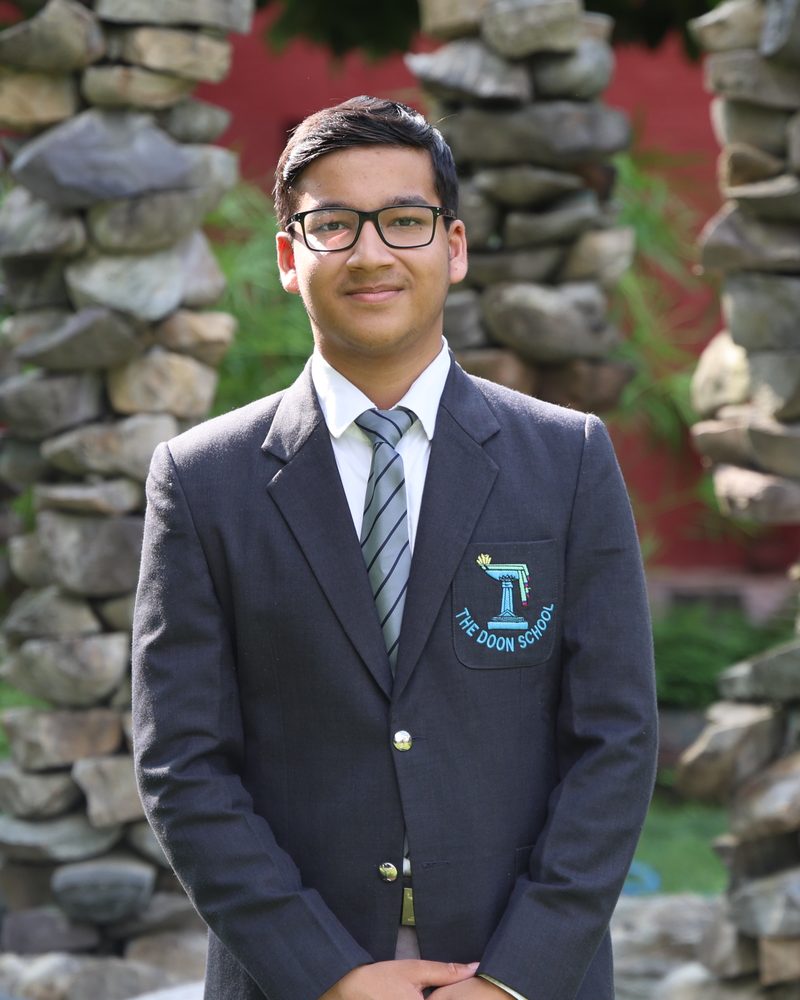
Samrat Gupta
Event Head
Samrat is a Grade 11 student at The Doon School pursuing the ISC curriculum, with a keen interest in Robotics and Artificial Intelligence, and hopes to build a career where technology meets business and finance. He serves as the House Robotics Captain, training juniors and organising builds for his house. He has represented the School at the STEM Innovation Challenge in Mumbai and at the World Robotics Olympiad. He follows politics closely and plays whatever sport comes his way. He is honoured to serve as the Event Head of Half-Life at the IPSC IT Fest 2026.
Deputy Event Head
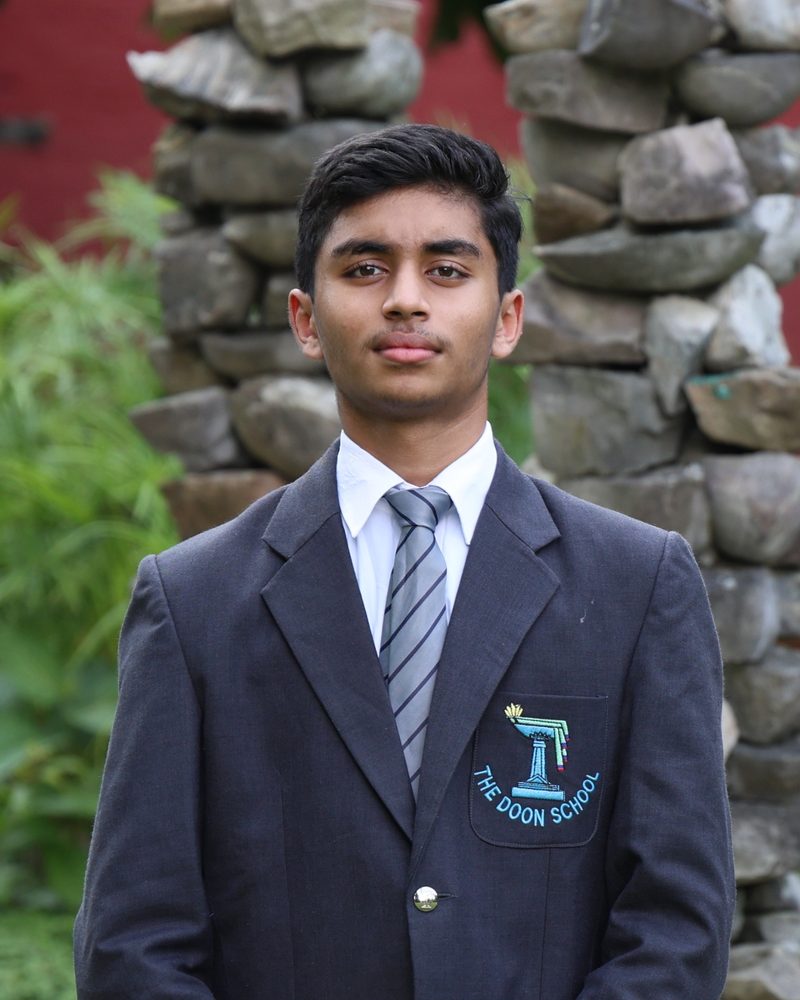
Vivaan Kumbhat
Next
Driver-controlled robots place four plants into the pots of matching colour and assemble a five-piece monument, with a surprise third stage for the semi-finals and final.