

1
Rulebook
Description and objective, team composition, format and progression, run structure and timings, permitted and prohibited actions, penalties, appeals, and definitions.
Events / Terra Incognita
The Doon School · 08–10 December 2026
The positions of the inner square, the fixed obstacles and the movable object are not revealed before the run, and no prior map is permitted. The grid map alone carries 60 of the 100 points.
SLAM: Autonomous Mapping and Pathfinding
Rules
Event details
Judging
Judging rubric
| Criterion | Weight | Marks |
|---|---|---|
| Grid map | 60 | |
| Return to the starting position | 15 | |
| Movable object | 10 | |
| Repository | 15 | |
| Total | 100 |
Weights are those in the event’s published documents. Scoring levels, tie-break order and who scores what are set out in full in the document pack below.
Documents
5 of 6 documents available
These are the documents your team will receive for Terra Incognita. Between them they set out everything a team needs in order to prepare.
1
Rulebook
Description and objective, team composition, format and progression, run structure and timings, permitted and prohibited actions, penalties, appeals, and definitions.
2
Robot Specification
Dimensions at start and expanded, mass, power source and voltage limits, permitted actuators and sensors, control method, communication protocol, prohibited materials.
3
Arena Specification
A dimensioned scale drawing in plan view, all fixed dimensions with tolerances, surface material and finish, wall heights, printable colour references, and the exact range of any variation between rounds.
A school must be able to build a practice replica from this document alone.
4
Judging Rubric
Criteria with point values summing to a stated total, scoring levels, tie-break order, who scores what, and when scores are published.
5
Inspection & Safety
Pre-competition inspection checklist and schedule, consequences of failed inspection, safety requirements during runs, spectator boundaries, and the emergency stop procedure.
6
Support Material
A worked example, a starter guide to core techniques, the concepts a team should learn, common mistakes, and an FAQ.
Documents marked “Available soon” will appear here as soon as they are released.
Flow
The event from start to finish, as the rules above set it out. The detailed documents for Terra Incognita will appear here once they are released to registered schools.
Inspection: size, battery, start switch, no LIDAR, code, centre mark, map display
2-minute preparation period
Official run starts on the robot’s start switch
One run of at most 5 minutes, fully autonomous. Up to 5 touches to correct a failure, never to navigate.
Explore and map the arena cell by cell
All processing onboard. No LIDAR, no prior map.
Push the movable object into the target green spot
Pushing only: no lifting or grabbing.
Take a full round and finish at the starting position
Final distance measured from the centre mark to the centre of the X.
Show the grid map on the HDMI monitor within 2 minutes
Checked cell by cell against the reference map.
Scored: grid map 60, return 15, object 10, repository 15
Who runs it
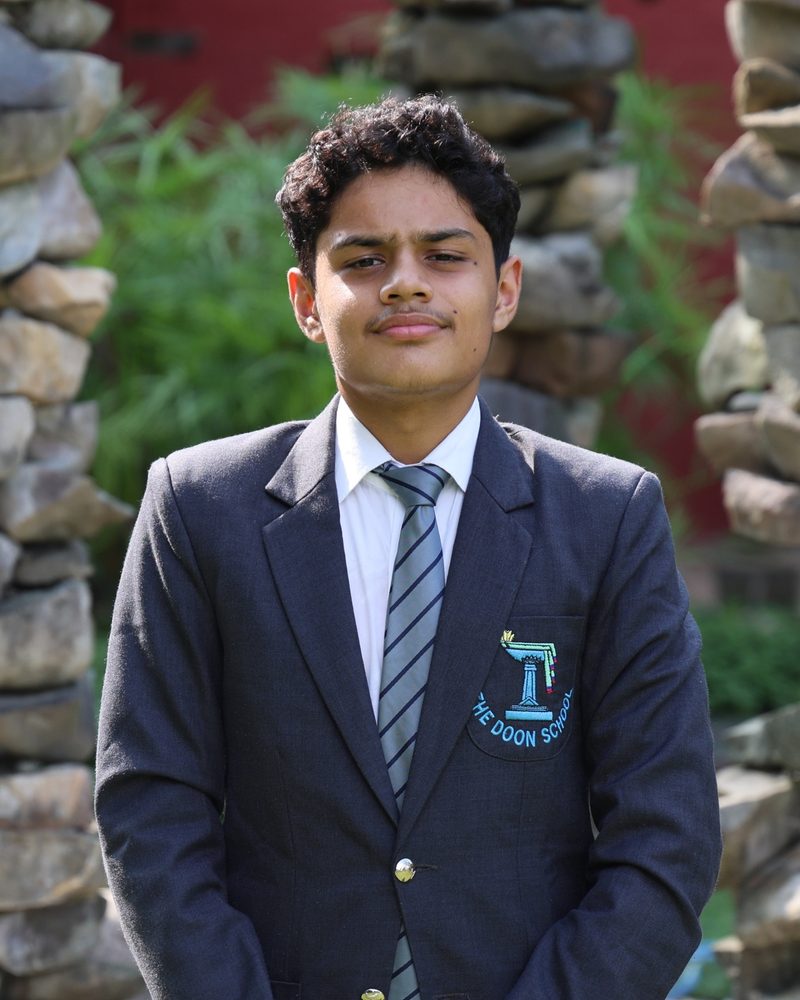
Trijat Shah
Event Head
Trijat is a Grade 11 student at The Doon School pursuing the ISC curriculum, with academic interests in History, the Sciences and Mathematics, alongside a wide range of skills in robotics and AI. Beyond the classroom his heart lies on the field, with football, hockey and athletics taking most of it, and he is a keen long-distance runner. He also enjoys watching and analysing football, with Manchester City taking most of his screen time, and is drawn to endurance pursuits like mountain biking and trekking. After four years in the Robotics activity, he is honoured to serve as an Event Head at the IPSC IT Fest.
Deputy Event Heads
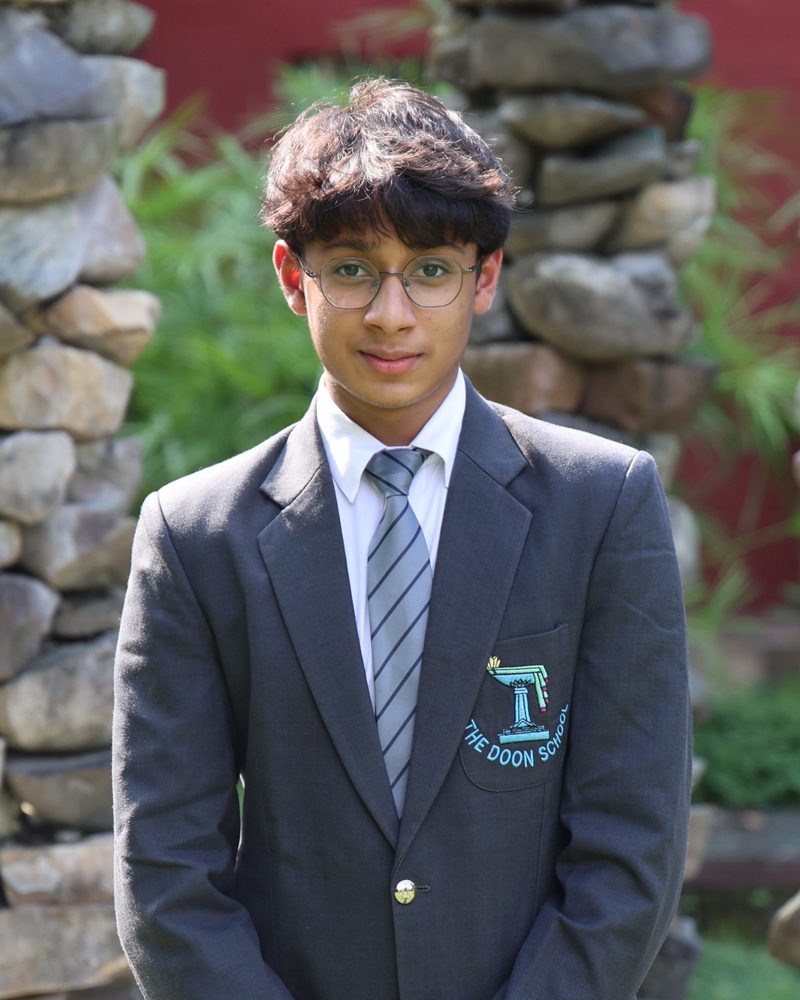
Aaryansh Kejriwal
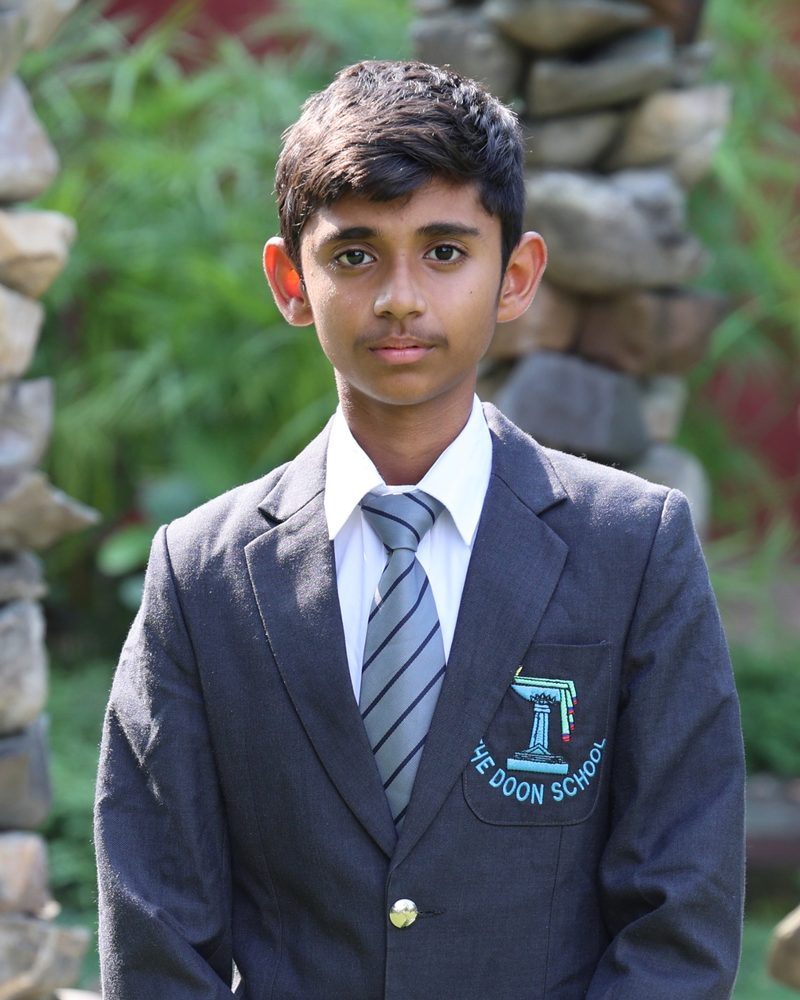
Arnav Kejriwal
Next
Autonomous robots follow a line track to sort 8 red, blue and green objects into the bins of the same colour, then park. The mix of colours changes each round, and is the same for every team.