

1
Rulebook
Description and objective, team composition, format and progression, run structure and timings, permitted and prohibited actions, penalties, appeals, and definitions.
Events / Hackathon
The Doon School · 08–10 December 2026
Participants are combined with students from other schools into cross-school Companies. Each Company appoints a CEO, CTO and CMO by chit-picking after the Opening Ceremony, and only then are the Problem Statements released.
Cross-school venture build
Rules
Fabrication. Hardware is optional. Campus fabrication facilities, including 3D printing, may be made available for approved hardware development. A hardware solution earns no extra credit for containing physical components, and a software-only solution is not disadvantaged.
Company structure. To be announced · TBC
Event details
Judging
Can you build it? Can you sell it? Can you sustain it?
Judging rubric
| Criterion | Weight | Marks |
|---|---|---|
| A. Programming, Technology & Product Development | 40 | |
| A1. Understanding of Problem & Technical Approach | 6 | |
| A2. Core Functionality & Working Prototype | 14 | |
| A3. Technical Complexity & Quality of Implementation | 6 | |
| A4. UI/UX & Product Design | 5 | |
| A5. Innovation & Technical Creativity | 5 | |
| A6. Testing, Reliability & Performance | 4 | |
| B. Marketing & Market Strategy | 35 | |
| B1. Target Market & Customer Understanding | 7 | |
| B2. Value Proposition & Product Positioning | 7 | |
| B3. Marketing Strategy & Customer Acquisition | 7 | |
| B4. Competitive Differentiation | 4 | |
| B5. Branding, Communication & Promotional Strategy | 4 | |
| B6. Marketing Feasibility & Product Integration | 6 | |
| C. Financial & Business Viability | 25 | |
| C1. Business Model & Revenue Generation | 5 | |
| C2. Costing & Budgeting | 5 | |
| C3. Pricing Strategy | 4 | |
| C4. Financial Viability & Sustainability | 5 | |
| C5. Resource & Operational Planning | 3 | |
| C6. Financial Assumptions, Risk & Scalability | 3 | |
| Total | 100 |
Weights are those in the event’s published documents. Scoring levels, tie-break order and who scores what are set out in full in the document pack below.
Documents
5 of 5 documents available
These are the documents your team will receive for Hackathon. Between them they set out everything a team needs in order to prepare.
1
Rulebook
Description and objective, team composition, format and progression, run structure and timings, permitted and prohibited actions, penalties, appeals, and definitions.
2
Platform & Environment Specification
Languages and libraries permitted, devices brought versus provided, internet access, policy on AI tools, provided datasets and platforms, submission format.
4
Judging Rubric
Criteria with point values summing to a stated total, scoring levels, tie-break order, who scores what, and when scores are published.
5
Inspection & Safety
Pre-competition inspection checklist and schedule, consequences of failed inspection, safety requirements during runs, spectator boundaries, and the emergency stop procedure.
6
Support Material
A worked example, a starter guide to core techniques, the concepts a team should learn, common mistakes, and an FAQ.
Flow
The event from start to finish, as the rules above set it out. The detailed documents for Hackathon will appear here once they are released to registered schools.
Registration
Opening Ceremony
Cross-school Company formation
Participants are combined with students from other schools.
CEO, CTO and CMO appointed
By the prescribed chit-picking process, before the Problem Statements are released.
Problem Statements released
Organised under multiple Sustainable Development Goals. Each Company selects one.
Development Period
Problem analysis, prototype development, testing and iteration, business and financial planning, and marketing strategy, until the submission deadline.
Final submission
Including the AI-use declaration.
15-minute Corporate Pitch
Question & Answer session with the Judging Panel
Scored out of 100; results at the Closing Ceremony
Who runs it
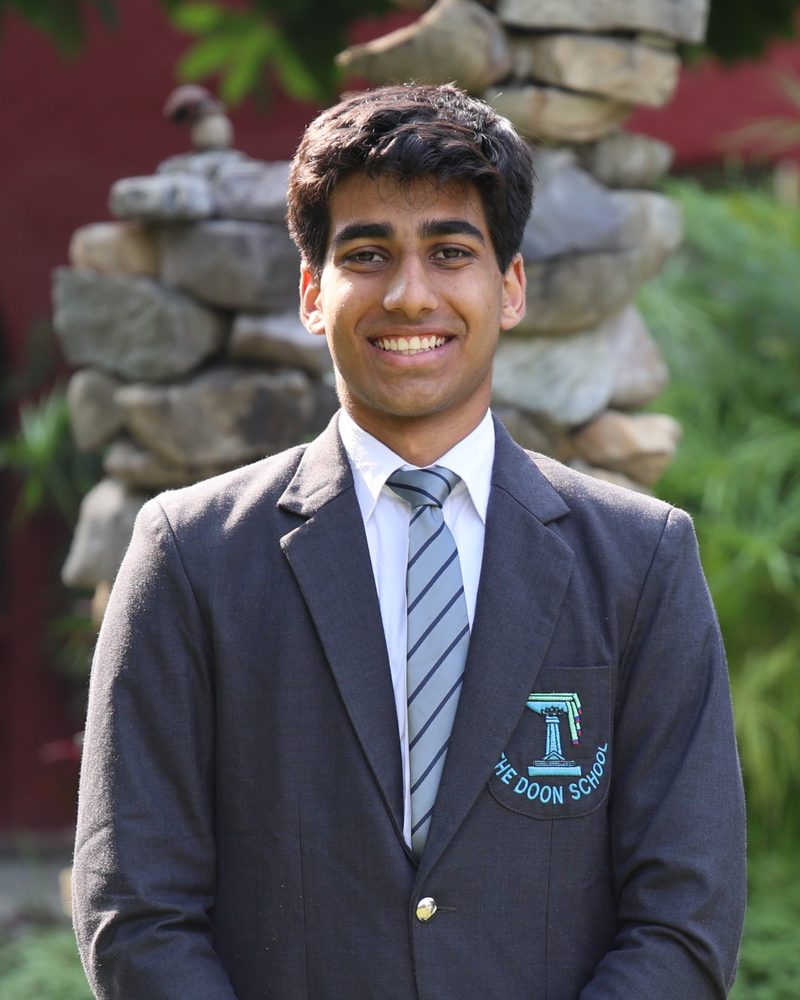
Vir Sandhu
Event Head
To be announced · TBC
Next
A team-based technology quiz with an MCQ preliminary round followed by a live final with rapid-fire and buzzer rounds.